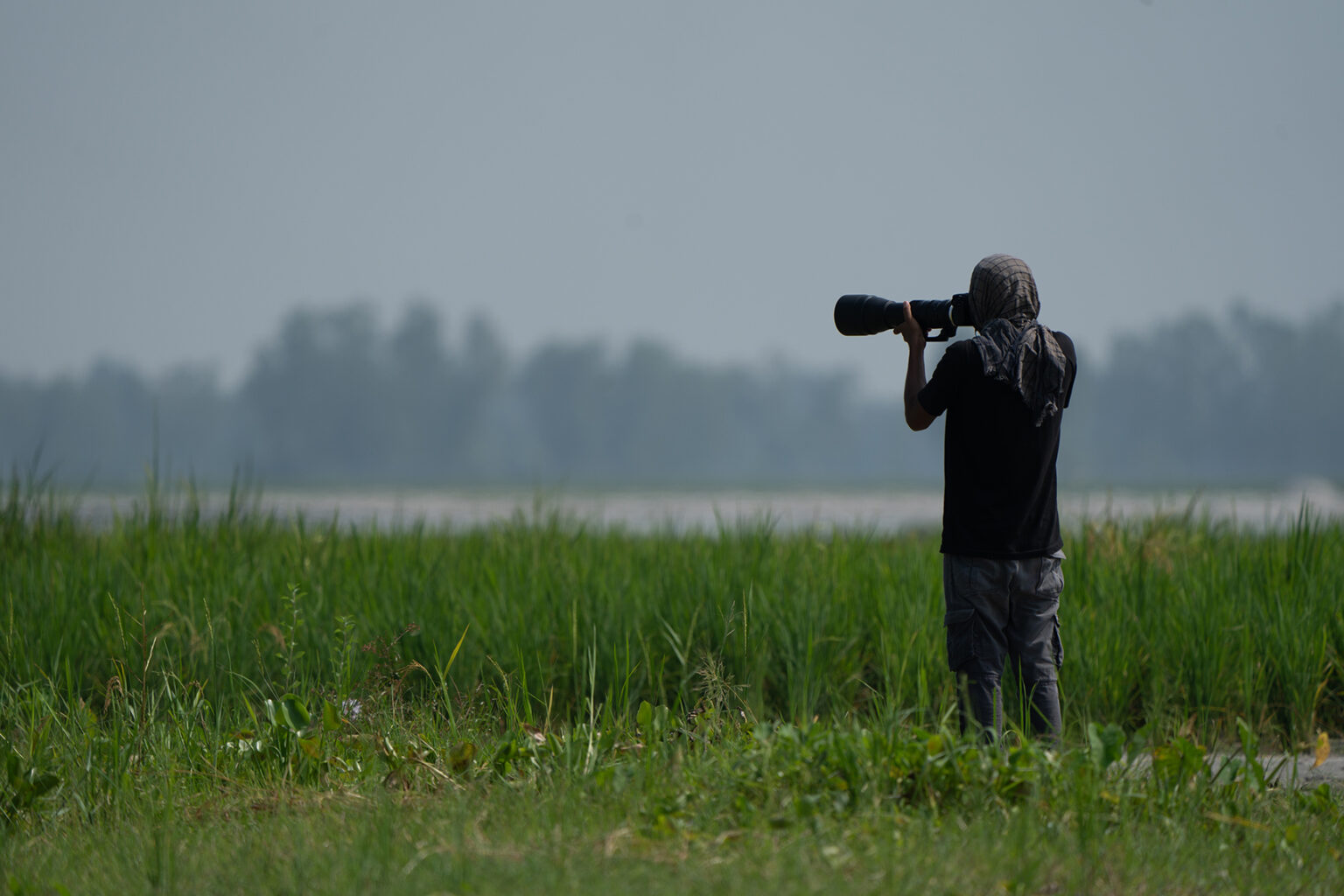
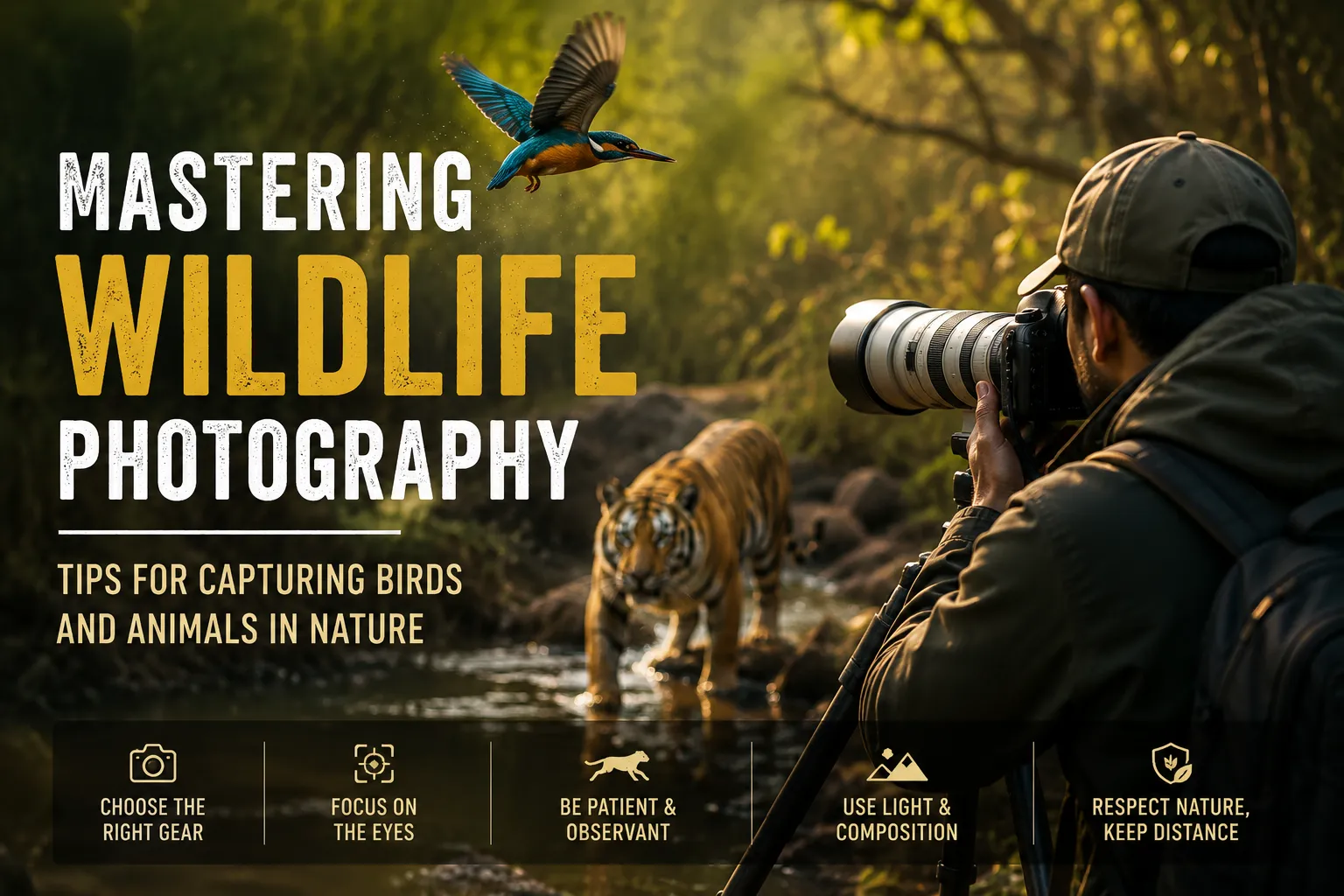
Wildlife photography is one of the most exciting and rewarding forms of photography. It allows photographers to explore forests, wetlands, mountains, and natural habitats while capturing rare and beautiful moments of animals and birds in the wild. Unlike studio photography, wildlife photography is unpredictable, which makes every successful image feel special and memorable.
To become a successful wildlife photographer, patience is one of the most important qualities. Animals do not pose for cameras, and the perfect moment may take hours or even days to capture. A wildlife photographer must learn animal behaviour, understand natural light, and stay prepared at all times.
Choosing the Right Equipment
While skill matters more than gear, having the right equipment can significantly improve wildlife photography.
Camera
A camera with fast autofocus and continuous shooting mode helps capture moving animals and birds.
Telephoto Lens
Wildlife subjects are often far away, so telephoto lenses such as 300mm, 400mm, or 600mm are commonly used.
Tripod or Monopod
These help stabilise heavy lenses and reduce camera shake.
Extra Batteries and Memory Cards
Wildlife photography sessions often last for long periods, especially in remote locations.
Understanding Camera Settings
Shutter Speed
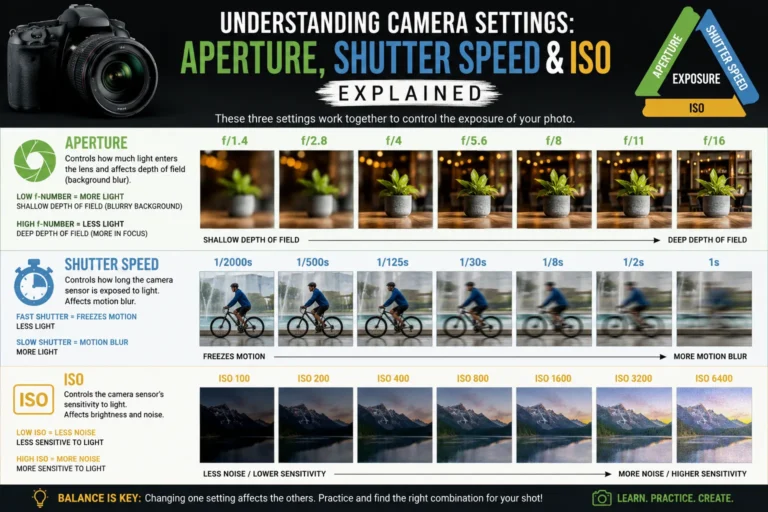
Fast shutter speeds help freeze movement.
- Birds in flight: 1/2000 sec or faster
- Walking animals: 1/1000 sec
Aperture
A wider aperture, like f/4 or f/5.6, helps create background blur and isolate the subject.
ISO
Increase ISO in low-light situations but avoid excessive noise.
Importance of Light
Lighting can completely transform wildlife photographs.
Golden Hour
Early morning and late afternoon provide soft and warm light.
Avoid Harsh Midday Light
Strong sunlight creates harsh shadows and loss of detail.
Composition Tips
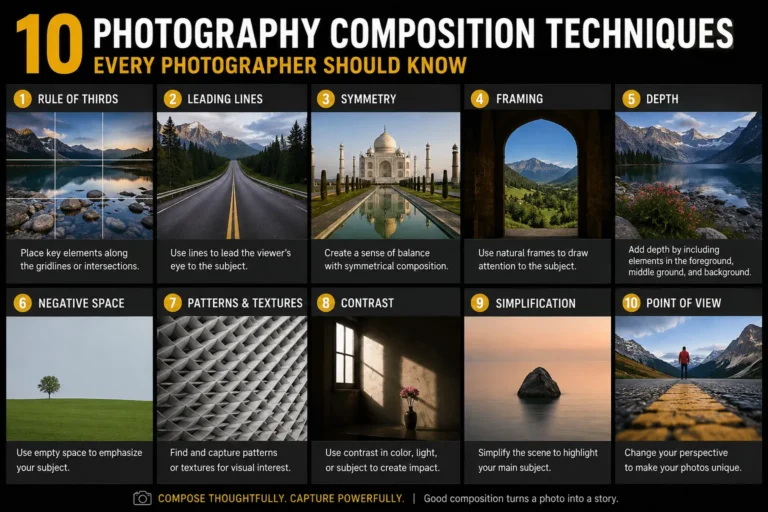
- Leave space in the direction the animal is looking.
- Focus sharply on the eyes.
- Use natural surroundings to tell a story.
- Try different perspectives instead of always shooting at eye level.
Ethical Wildlife Photography
Respect nature and avoid disturbing animals.
- Never harm wildlife for a photograph.
- Maintain a safe distance.
- Avoid using flash on sensitive animals.
- Protect natural habitats.
Final Thoughts
Wildlife photography is more than taking pictures of animals. It is about storytelling, patience, and respect for nature. Every image captured in the wild becomes a memory of adventure and discovery.